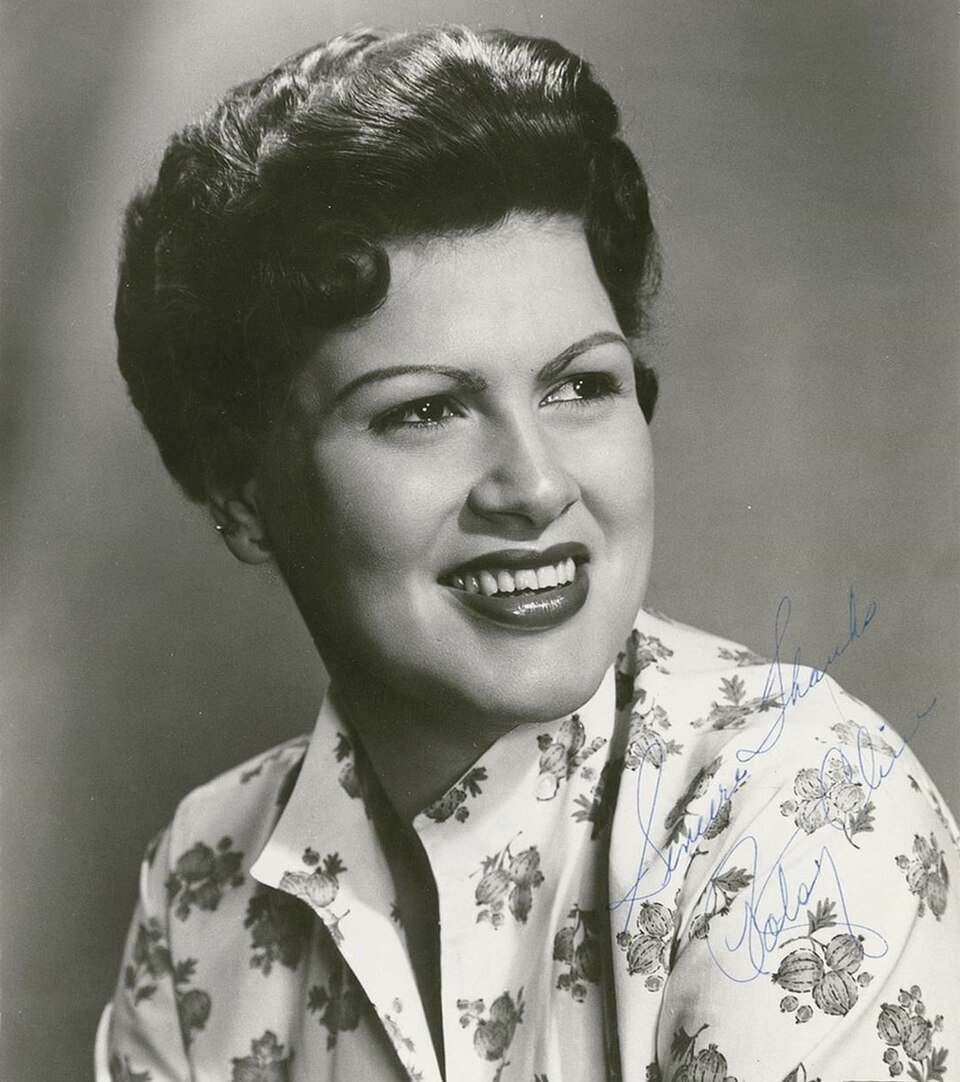
Artist collection / Country · Nashville Sound
Patsy Cline: Biography, Essential Albums & Ten Listening Stories
Thirty years, one unmistakable voice — and a handful of records that still stop rooms.

A voice worth returning to
Patsy Cline was born Virginia Patterson Hensley on September 8, 1932, in Winchester, Virginia. She began performing professionally at fifteen on local radio station WINC, singing in a region where country music was a working musician’s trade, not a glamour profession. By her early twenties she had a stage name, a powerful contralto, and a contract with Four Star Records — a label that leased her recordings to Decca and, fatefully, controlled her choice of material.
Her first hit arrived almost by accident. “Walkin’ After Midnight,” written by Alan Block and Donn Hecht, was a song she recorded reluctantly in November 1956. When she performed it on Arthur Godfrey’s Talent Scouts in January 1957, the audience applause froze the show’s meter, and the rush-released single reached No. 2 on the country chart and No. 12 on the pop chart. Then came the lean years: Four Star kept feeding her songs she didn’t believe in, and the hits dried up.
Everything changed in 1960 when producer Owen Bradley began steering her toward the emerging Nashville Sound — smooth strings, background vocals, and that voice front and center. The results were immediate: “I Fall to Pieces” (1961), her first No. 1 country hit, and “Crazy” (1961), written by a then-unknown Willie Nelson, recorded in a single take while Cline was still recovering from a near-fatal car accident that had shattered her ribs. “She’s Got You” followed in 1962, topping the country chart again.

Cline’s final recording sessions took place in February 1963. On February 5 she cut “Sweet Dreams,” a Don Gibson ballad that would be released after her death and become one of her signature songs. One month later, on March 5, 1963, she was killed in a plane crash near Camden, Tennessee, alongside Cowboy Copas, Hawkshaw Hawkins, and her manager and pilot Randy Hughes. She was thirty years old.
Ten years after her death, in 1973, she became the first female solo artist inducted into the Country Music Hall of Fame. Her influence runs through generations of singers — from Loretta Lynn, her close friend, to modern artists who cite her phrasing as the standard. This collection follows her recording career in order: the reluctant breakthrough, the songs she fought her label to avoid, the Nashville Sound masterpieces, and the final sessions. Listen for how little she needs to prove — the power is in the control.
Follow the years
Ten stories to start with
A reluctant recording, a TV talent show, and the accident that made her a star.
02 / 1957 / Behind the SongsA Poor Man’s Roses: The Song She Chose Over the HitThe B-side she actually wanted to sing — and the tug-of-war behind it.
03 / 1961 / Behind the SongsI Fall to Pieces: The Hit She Almost RefusedShe didn’t want the song. Then it became her first No. 1.
04 / 1961 / Behind the SongsCrazy: The One-Take Vocal She Recorded on CrutchesBroken ribs, a borrowed Willie Nelson demo, and one perfect take.
05 / 1962 / Behind the SongsShe’s Got You: Heartbreak Worn Like Evening WearHank Cochran’s song of dignified jealousy, sung without a crack.
06 / 1962 / Behind the SongsSo Wrong: The Uptempo HeartbreakProof she could swing a sad song without slowing it down.
07 / 1963 / Behind the SongsSweet Dreams: Twenty-Eight Days Before the EndHer final session produced the elegy she never heard on the radio.
08 / 1963 / Behind the SongsFaded Love: Borrowing a Western Swing StandardA Bob Wills classic, remade in the Nashville Sound image.
09 / 1963 / Behind the SongsLeavin’ on Your Mind: The Posthumous GoodbyeReleased after her death, a farewell she didn’t know she was singing.
10 / 1963 / Behind the SongsBack in Baby’s Arms: Tenderness at Full StrengthThe gentlest record of her final year — no heartbreak required.
Artist biography and discography reference ↗
Recording-session history: “Crazy” ↗
The final flight, March 5, 1963 ↗
Past Tunes’ listening notes are original editorial interpretation. Release years refer to the particular album or recording identified in each article.