Patsy Cline / Behind the Songs
Walkin’ After Midnight: The Night the Applause Meter Froze
She didn’t want the song, didn’t want to sing it on television — and then the audience wouldn’t stop applauding.

The record in context
“Walkin’ After Midnight” was written in 1954 by Alan Block and Donn Hecht, two staff songwriters who had originally aimed it at pop singer Kay Starr; her label turned it down. The song drifted until it landed with Patsy Cline, who recorded it on November 8, 1956, at Bradley Studios in Nashville under producer Paul Cohen. She agreed to cut it only on the condition that she could also record “A Poor Man’s Roses (Or a Rich Man’s Gold),” the song she actually believed in.
Nothing much happened until January 21, 1957, when Cline appeared on the CBS program Arthur Godfrey’s Talent Scouts. She had arrived in New York intending to sing “A Poor Man’s Roses,” with her mother Hilda serving as her on-air “talent scout,” but the show’s producers insisted on “Walkin’ After Midnight” instead. Cline sang it in the 8:30 p.m. slot, and the studio audience’s ovation was so sustained that it froze the program’s applause meter. She won first place that night. Decca rush-released the single on February 11, 1957, and it climbed to No. 2 on the Billboard country chart and No. 12 on the pop chart — one of the first genuine country-to-pop crossover hits, and Cline’s first major success.
Listen closely
What you hear first is the walking bass and the brushed drums setting a nocturnal pace — the arrangement is a slow, bluesy stroll, and the title tells you exactly what kind of stroll it is. Cline enters low and unhurried, and the genius of the performance is restraint: she never pushes the loneliness into melodrama. When she sings about searching for a lost love “out walkin’ after midnight,” the ache is in the steadiness of her delivery, not in any vocal fireworks.
Listen for the way she handles the word “lonely” across the choruses. Each repetition lands slightly differently — a little more worn, a little more resigned — as if the walk is getting longer with every verse. That emotional shading, done without changing the melody, is the first glimpse of the interpretive singer she would become. The Jordanaires-style background vocals (the Anita Kerr Singers supported many of her early sides) frame her voice rather than competing with it, a preview of the Nashville Sound polish that producer Owen Bradley would later perfect with her.
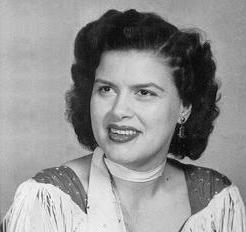
It is worth remembering that Cline thought this song was “just a little too pop,” in her own estimation, and not country enough for her. The irony is that the record’s in-between quality — too bluesy for pure country, too country for pure pop — is exactly what let it cross over. The pop audience heard a torch singer; the country audience heard one of their own who had wandered into the city at night. Both were right.
As a debut hit, “Walkin’ After Midnight” also set the pattern of Cline’s career: her biggest moments would come from songs she initially resisted. “I Fall to Pieces” and “Crazy” would repeat the story. But this one matters most because without the frozen applause meter on a January night in 1957, the rest might never have happened.
Release and recording reference ↗
Release context is sourced above. Listening observations are Past Tunes’ original interpretation, not quotations from the artist.
More from Patsy Cline
The B-side she actually wanted to sing — and the tug-of-war behind it.
1961 / Behind the SongsI Fall to Pieces: The Hit She Almost RefusedShe didn’t want the song. Then it became her first No. 1.
1961 / Behind the SongsCrazy: The One-Take Vocal She Recorded on CrutchesBroken ribs, a borrowed Willie Nelson demo, and one perfect take.
1962 / Behind the SongsShe’s Got You: Heartbreak Worn Like Evening WearHank Cochran’s song of dignified jealousy, sung without a crack.
1962 / Behind the SongsSo Wrong: The Uptempo HeartbreakProof she could swing a sad song without slowing it down.
1963 / Behind the SongsSweet Dreams: Twenty-Eight Days Before the EndHer final session produced the elegy she never heard on the radio.
1963 / Behind the SongsFaded Love: Borrowing a Western Swing StandardA Bob Wills classic, remade in the Nashville Sound image.
1963 / Behind the SongsLeavin’ on Your Mind: The Posthumous GoodbyeReleased after her death, a farewell she didn’t know she was singing.
1963 / Behind the SongsBack in Baby’s Arms: Tenderness at Full StrengthThe gentlest record of her final year — no heartbreak required.