Patsy Cline / Behind the Songs
Crazy: The One-Take Vocal She Recorded on Crutches
Broken ribs, a demo from an unknown Willie Nelson, and a single take that became immortal.

The record in context
In June 1961, Patsy Cline was nearly killed in a head-on car collision. She was thrown through the windshield, suffered a dislocated hip and several broken ribs, and spent a month in the hospital. Two months later, still on crutches, she arrived at Owen Bradley’s Quonset Hut studio in Nashville on August 21, 1961, to record a song she hadn’t wanted: “Crazy,” written by a struggling young songwriter named Willie Nelson, whose demo — sung in his off-kilter, behind-the-beat phrasing — Cline reportedly disliked on first hearing.
The session fell apart. Her ribs wouldn’t let her sustain the long notes; take after take failed. Bradley finally sent her home and had Nashville’s A-Team — Grady Martin, Floyd Cramer, Harold Bradley, Bob Moore, Buddy Harman, and the Jordanaires — record the instrumental track without her, an almost unheard-of procedure in 1961. About two weeks later, Cline returned, stood at the microphone, and sang “Crazy” in a single take. Released in October 1961, it reached No. 2 on the country chart and No. 9 on the pop chart, and became her signature song — later inducted into the Library of Congress’s National Recording Registry.
Listen closely
The first thing to notice is the arrangement: Bradley’s “countrypolitan” at its most refined. Floyd Cramer’s slip-note piano curls around the melody, the bass walks with jazz-like ease, and the Jordanaires float behind Cline like a held breath. Against this velvet, Cline’s vocal is a study in phrasing. She discarded Nelson’s idiosyncratic timing and rebuilt the song as a straight ballad — but kept its conversational intimacy, so the lyric feels spoken as much as sung.
Listen to the opening line: “Crazy, I’m crazy for feeling so lonely.” She doesn’t belt it; she confesses it. The genius is in the dynamic control — she swells into “worry” and “sorry” and then pulls back, so the emotion arrives in waves rather than a flood. And consider the physical reality: this is a woman whose ribs had been broken weeks earlier, singing a one-take vocal over a pre-recorded track she couldn’t rehearse with live. The slight breathiness you hear isn’t a stylistic choice imposed afterward; it’s the sound of a singer managing her body in real time — and turning that management into art.
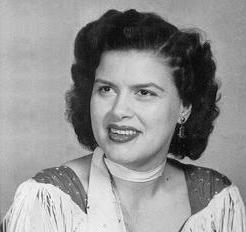
The song also made Willie Nelson. Before “Crazy,” he was a failed performer hawking songs in Nashville; the royalties and credibility from Cline’s hit gave him the foothold to become, eventually, Willie Nelson. That a singer recorded a songwriter’s odd demo against her own judgment, and both of them were transformed by it, is one of popular music’s great ironies — and a reminder that the best A&R instinct in the room that night belonged to Owen Bradley, who heard a standard where Cline heard a demo she didn’t like.
Play it loud once, then quietly. Loud, you hear the arrangement’s sophistication; quiet, you hear the vocal’s solitude. The record works at both volumes because it was built from opposite directions: a band playing together in August, a voice alone in September, fused into something that sounds like neither and both.
Recording-session history: “Crazy” ↗
The August 1961 sessions ↗
Release context is sourced above. Listening observations are Past Tunes’ original interpretation, not quotations from the artist.
More from Patsy Cline
A reluctant recording, a TV talent show, and the accident that made her a star.
1957 / Behind the SongsA Poor Man’s Roses: The Song She Chose Over the HitThe B-side she actually wanted to sing — and the tug-of-war behind it.
1961 / Behind the SongsI Fall to Pieces: The Hit She Almost RefusedShe didn’t want the song. Then it became her first No. 1.
1962 / Behind the SongsShe’s Got You: Heartbreak Worn Like Evening WearHank Cochran’s song of dignified jealousy, sung without a crack.
1962 / Behind the SongsSo Wrong: The Uptempo HeartbreakProof she could swing a sad song without slowing it down.
1963 / Behind the SongsSweet Dreams: Twenty-Eight Days Before the EndHer final session produced the elegy she never heard on the radio.
1963 / Behind the SongsFaded Love: Borrowing a Western Swing StandardA Bob Wills classic, remade in the Nashville Sound image.
1963 / Behind the SongsLeavin’ on Your Mind: The Posthumous GoodbyeReleased after her death, a farewell she didn’t know she was singing.
1963 / Behind the SongsBack in Baby’s Arms: Tenderness at Full StrengthThe gentlest record of her final year — no heartbreak required.