Do you remember the afternoons when MTV was the centre of the teenage universe? You would come home from school, drop your bag by the door, and switch on the television, and suddenly the living room belonged to music videos. The screen was full of colour, dancing, and singers who looked like they came from another planet. In the autumn of 1984, one afternoon became legend, because a young singer walked onto a stage in a wedding dress and changed what a pop star was allowed to do on live television. If you were watching that night, you never forgot it. If you only heard about it the next day at school, you wished you had been.
The occasion was the very first MTV Video Music Awards, held in September 1984 in New York. MTV itself was barely three years old, and the awards show was a gamble: a celebration of a new art form, the music video, broadcast live. Madonna was not yet the biggest star in the world. She was a promising new singer with a debut album behind her and a growing reputation for videos that people talked about. Her first album, released in 1983, had given radio a run of bright dance records: Holiday, Lucky Star, and Borderline, songs that sounded like summer and made her a familiar voice on the radio and a familiar face on MTV. But she was still, in the autumn of 1984, an act on the rise rather than an institution. One performance would change that in a single night.
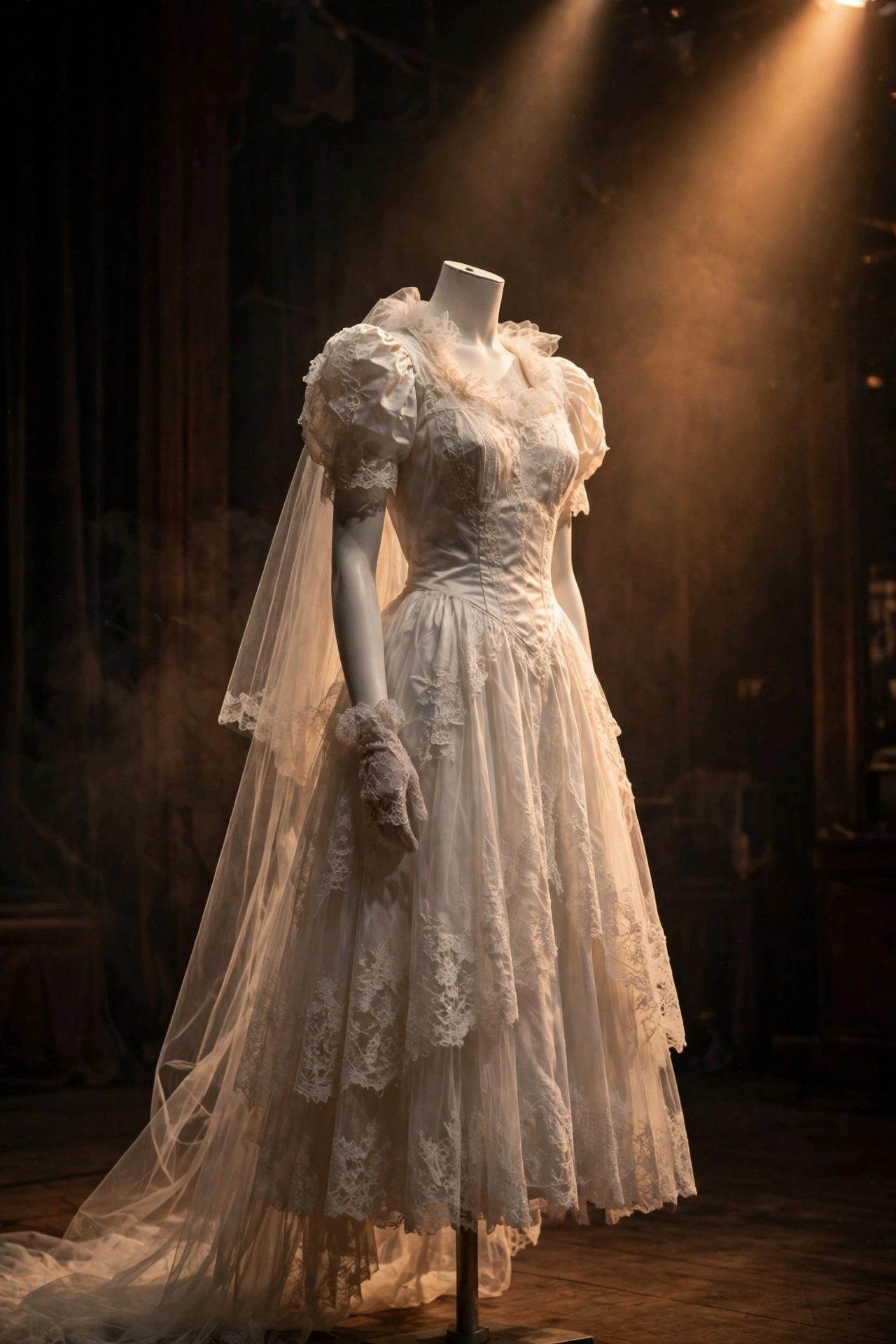
She came out to sing Like a Virgin, the title song of her forthcoming second album, dressed as a bride. The outfit was white from head to toe: a wedding dress, a veil, and a belt that read “Boy Toy” in bold letters. It was a collision of two images that were never supposed to go together — innocence and mischief, the sacred and the playful — and that collision was exactly the point. Madonna stood at the top of a giant wedding cake set, looking for all the world like a bride about to walk down the aisle, and then she began to sing, and the performance turned into something nobody in the audience had expected.
What happened next became one of the most replayed moments in early MTV history. During the performance, Madonna ended up rolling on the stage floor, her dress flying, her veil slipping, singing all the while with a grin that said she was enjoying every second of it. The story told afterwards was that one of her shoes had slipped off and she had decided, in the moment, to go with it rather than stop the show. Whether planned or improvised, the effect was electric. The audience, made up of musicians, executives, and stars, did not know whether to be shocked or delighted. Most of them were both. Television cameras captured it all, and by the next morning, the performance was the talk of the music world.
It is worth pausing to remember what made the moment so powerful. In 1984, pop performances on television were still mostly polite affairs. Singers stood at microphones, bands played their instruments, and the camera kept a respectful distance. Madonna broke that contract. She treated the stage like a playground and her own image like a costume she could put on and take off at will. The wedding dress was not a statement about marriage. It was a joke, a provocation, and a declaration of independence all at once: a young woman taking the most traditional symbol of female innocence and wearing it while singing a song about desire, on live television, in front of the whole industry. People who loved it loved it fiercely. People who hated it could not stop talking about it. Either way, everyone was talking about Madonna.
The timing could not have been better. Her second album, Like a Virgin, arrived in the final months of 1984, and its title song became her first No. 1 single in America. Suddenly the singer from the wedding cake was everywhere: on the radio, on MTV, on magazine covers, in record stores where teenagers bought the album and studied the sleeve. The VMA performance had done what no advertising campaign could do. It had given her an identity in the public mind — bold, funny, fearless, and impossible to ignore — and it had given the song a story that made people want to hear it again and again.
For fans who were there, the performance is a memory that still feels fresh. You can probably picture it even now: the white dress against the dark stage, the veil, the grin, the moment the whole thing tipped over from a pretty pop performance into something wilder. It was the night a generation of viewers learned that a pop star could be more than a voice on a record. She could be a character, a comedian, a provocateur, and the author of her own image, all in the space of a single song. MTV had been looking for a star who understood television the way it understood music. That night, it found her.
The performance also marked a turning point for the awards show itself. The VMAs would go on to become famous for unpredictable live moments, and this was the first of them — the moment that set the template. Future performers would chase the same kind of shock and delight, but few would match the simplicity of it: one singer, one dress, one song, and a willingness to let the performance get messy in front of millions of people. That willingness became Madonna’s signature, and it started here, on a stage in New York, in a wedding dress, in September 1984.
So here is the question for you. Where were you on the night of the first MTV Video Music Awards? Did you watch it live, or did you hear about it the next day and rush to find someone with a tape of it? And what did you think when you saw a bride rolling around on a stage, singing about virginity with a “Boy Toy” belt? Tell us, because for millions of fans, that performance is not just a music video memory. It is the moment Madonna stopped being a promising new singer and became Madonna.
About the author: Tommy Hayes writes about the songs that defined America in the 1970s and 1980s. He grew up with a radio always on — in the kitchen, in the car, in a bedroom with posters on the wall — and he writes from that memory: what these songs meant then, and why they still matter now.
Keep reading:
Material Girl
Madonna · Original album era: 1984 · Official YouTube video
Played from the artist’s official YouTube channel. Availability may vary by country. Watch on YouTube ↗
4 thoughts on “Like a Virgin at the 1984 MTV Video Music Awards”