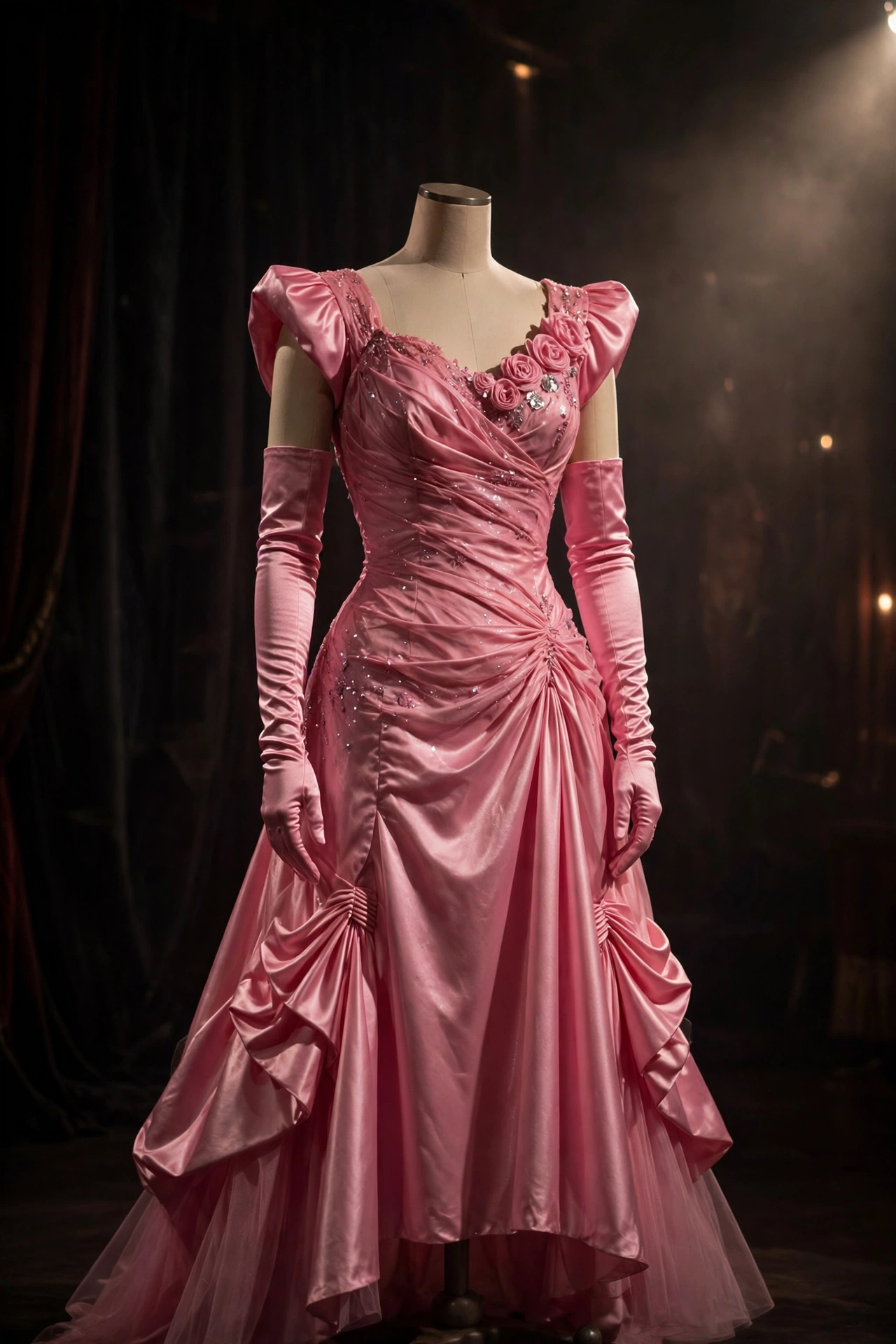
Do you remember the first time you saw the video? It was 1985, and the television was showing a pink dress, a staircase, and a room full of men in suits, all of them offering jewels to a blonde woman who seemed both delighted and completely unimpressed. If you were a teenager that year, you probably tried to describe it to your friends the next day and failed, because the video was doing several things at once: it was a joke, a tribute, and a star-making performance, all wrapped in three minutes of bright pop music. The song was Material Girl, and after it, Madonna was not just a pop singer anymore. She was a cultural figure, with a nickname she would carry for the rest of her career.
The song came from her second album, Like a Virgin, released in late 1984. By the time Material Girl was released as a single in 1985, Madonna was already famous from the wedding-dress performance and the album’s title song. But Material Girl did something different. Where Like a Virgin had been provocative, Material Girl was playful. It was a bouncy, sparkling pop song about a woman who likes nice things and is not embarrassed to say so, sung with a wink that made it impossible to tell where the character ended and the singer began. Was she celebrating wealth, mocking it, or doing both at the same time? That ambiguity was part of the fun, and audiences loved arguing about it.
The video made the argument visual, and it did so by reaching back to Hollywood history. It recreated, in loving detail, the famous scene in which Marilyn Monroe, dressed in pink, sings about diamonds while surrounded by adoring men. Madonna wore a similar pink gown, sang to a similar room of suitors, and copied Monroe’s poses and gestures with obvious affection. But the video added a twist that changed the meaning entirely. Between the fantasy scenes, it showed the “real” Madonna: a young woman in ordinary clothes, unimpressed by a rich director character who tries to win her over with expensive gifts, preferring instead a simple, funny man who gives her flowers. The message, if there was one, was deliciously double: the fantasy is fun to watch, but the reality is more interesting.
That double game became Madonna’s trademark. She was borrowing from the past — from Monroe, from old Hollywood glamour, from the pin-up tradition — and remixing it for the MTV age, with a knowing smile that told viewers she understood exactly what she was doing. Older audiences recognised the reference and smiled. Younger audiences, many of whom had never seen the Monroe film, simply saw a dazzling new star in a pink dress and wanted to be her, or to know her, or at least to buy the single. The video was played constantly on MTV, and the song climbed to No. 2 on the American charts, kept from the top spot by a charity single that dominated the spring of 1985. It hardly mattered. The song had already done its real work: it had given Madonna a second identity.
The nickname came with it, and it stuck. From 1985 onwards, newspapers, magazines, and fans called her the Material Girl, sometimes affectionately, sometimes critically, always recognisably. Madonna herself played along, then pushed back, then played along again, in a pattern that would repeat throughout her career: the public gives her a label, she wears it for a while, and then she changes the costume and makes them find a new one. But in 1985, the label fit the moment perfectly. She was young, rich, famous, and photographed constantly, and the song gave all of that a theme tune.
The phrase itself escaped the song and entered everyday language. Within a few years, “material girl” was used in magazines and conversation to describe a whole attitude towards fashion, shopping, and ambition, whether the speaker meant it kindly or not. Fashion pages copied the look — the pink, the bows, the layered jewellery — and costume shops sold versions of the video outfit for parties and Halloween. That is a rare kind of success for a pop single: not just a hit on the charts, but a phrase and an image that outlived the chart run and became part of how people talked about the decade.
The same year brought her first real film success. In Desperately Seeking Susan, released in 1985, Madonna played Susan, a free-spirited young woman whose life is accidentally swapped with that of a bored housewife. The film was a comedy, light and charming, and Madonna was widely praised for being natural and funny on screen. The song Into the Groove, written for the film, became a hit in its own right, and the film’s success proved that Madonna was not only a recording star. She could act, she could carry a movie, and she could bring her pop audience with her into the cinema. For fans who had followed her since the debut album, it felt like watching a friend get famous in real time: first the radio, then MTV, then the movies, each step bigger than the last.
There is a reason Material Girl still gets played at parties and quoted in headlines decades later. It is not just a catchy song, though it is certainly that. It is a perfect snapshot of a moment when pop music, video, fashion, and Hollywood collided, and one young woman stood at the centre of all of it, winking at the audience. The pink dress became an icon. The nickname became a shorthand. And the video became a lesson in how a pop star could use the past to invent her own future, borrowing a legend’s image and making it unmistakably her own.
So here is the question for you. When you first saw the Material Girl video, did you get the Marilyn Monroe reference, or did you just think it was the most glamorous thing you had ever seen? And did you own the single, or the album, or did you just wait for it to come on the radio and turn it up? Tell us, because for millions of fans, Material Girl is not just a song from 1985. It is the moment Madonna became a movie star, a fashion icon, and a household name, all in the space of one pink dress.
About the author: Tommy Hayes writes about the songs that defined America in the 1970s and 1980s. He grew up with a radio always on — in the kitchen, in the car, in a bedroom with posters on the wall — and he writes from that memory: what these songs meant then, and why they still matter now.
Keep reading:
Material Girl
Madonna · Original album era: 1984 · Official YouTube video
Played from the artist’s official YouTube channel. Availability may vary by country. Watch on YouTube ↗
3 thoughts on “Material Girl”